07 — Privacy
Your documents never leave your device.
Skinny Jean does not collect, transmit, or store any personal information. It is a utility that runs entirely on the Mac, iPhone or iPad you installed it on.
Last updated: August 31, 2026
1. Zero data collection
We do not collect, harvest, store, sell, or transmit your personal data or the contents of your documents. HoneyWired operates no servers for this app and has no way to see what you compress.
2. No network requests
Skinny Jean contains no networking code and makes no network requests. Your PDFs are processed entirely on your own device. Nothing is uploaded, and nothing needs to be.
On the Mac this is enforced rather than promised: the app is not granted the sandbox’s network entitlement, so it could not reach the internet even if it tried. iOS has no equivalent entitlement to withhold — every iOS app has network access and cannot give it up — so on iPhone and iPad the same claim is a statement about what the app does, not about what it is prevented from doing. It is checkable either way: the app has no reason to talk to anything, and doesn’t.
The Privacy, Terms, Support and Home links hand a web address to your browser, which loads it. Skinny Jean itself never opens a connection.
3. Your files
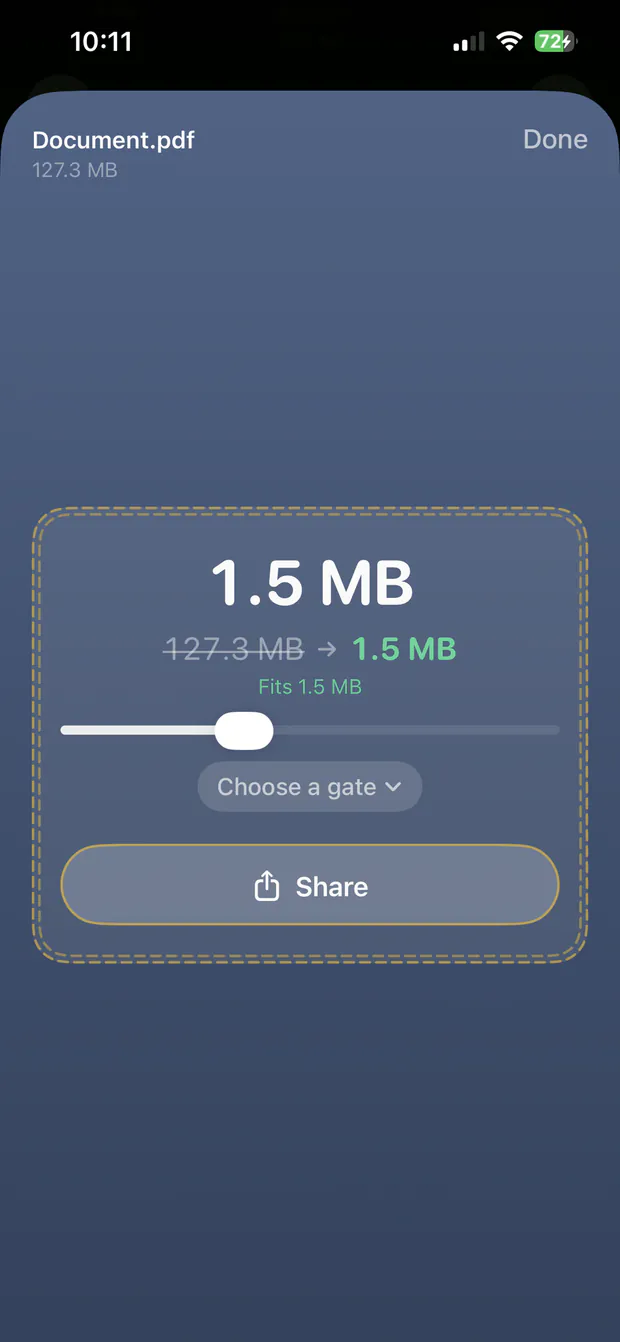
Your original files are never modified, moved, or deleted. Temporary working files are created while compressing and removed as soon as the job finishes.
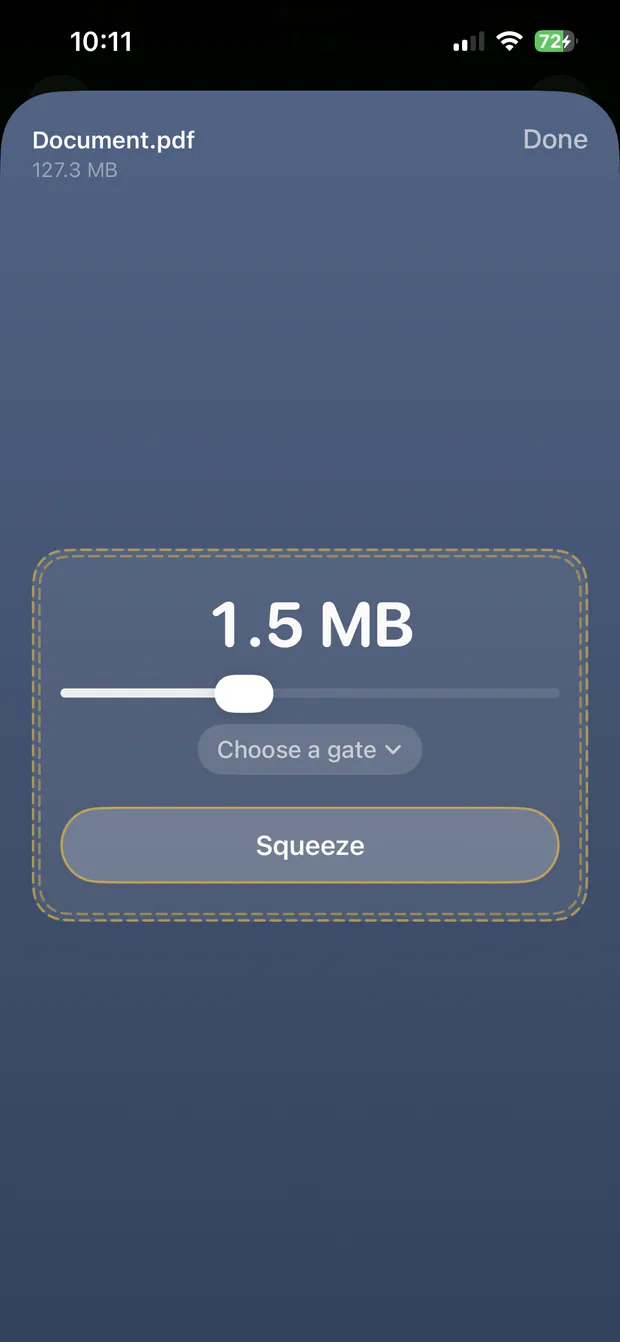
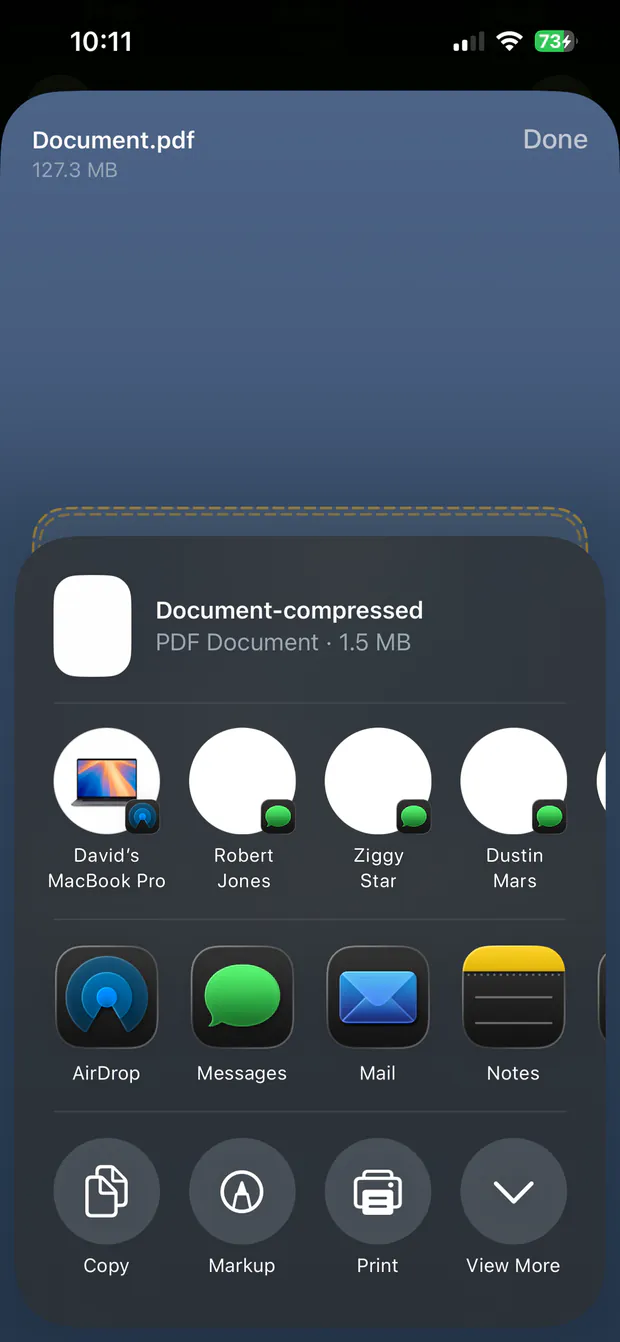
On the Mac, compressed copies are written to your Downloads folder, or to the destination you pick. On iPhone and iPad the compressed file goes wherever you send it — Save to Files, Mail, Messages, AirDrop — and nowhere else until you choose.
4. The camera, on iPhone and iPad
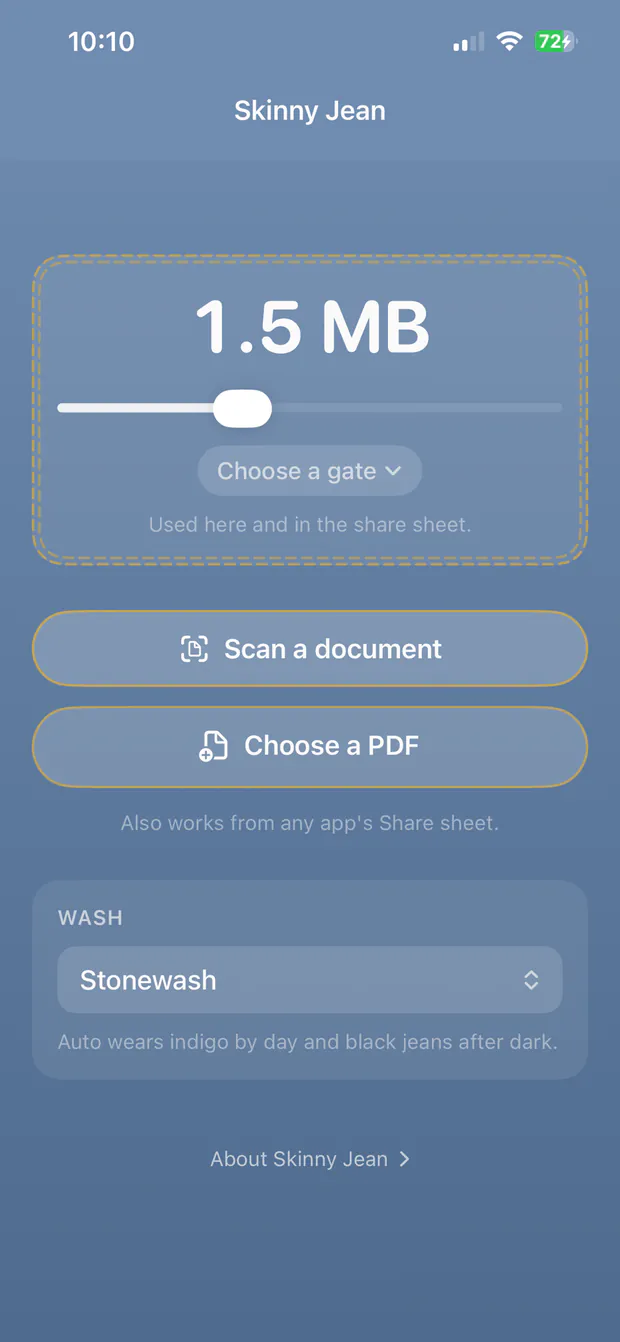
Scanning a document uses the camera, and only while you are scanning. The pages become a PDF on the device, are compressed on the device, and are never uploaded. Skinny Jean does not ask for or receive access to your photo library.
5. What is stored on your device
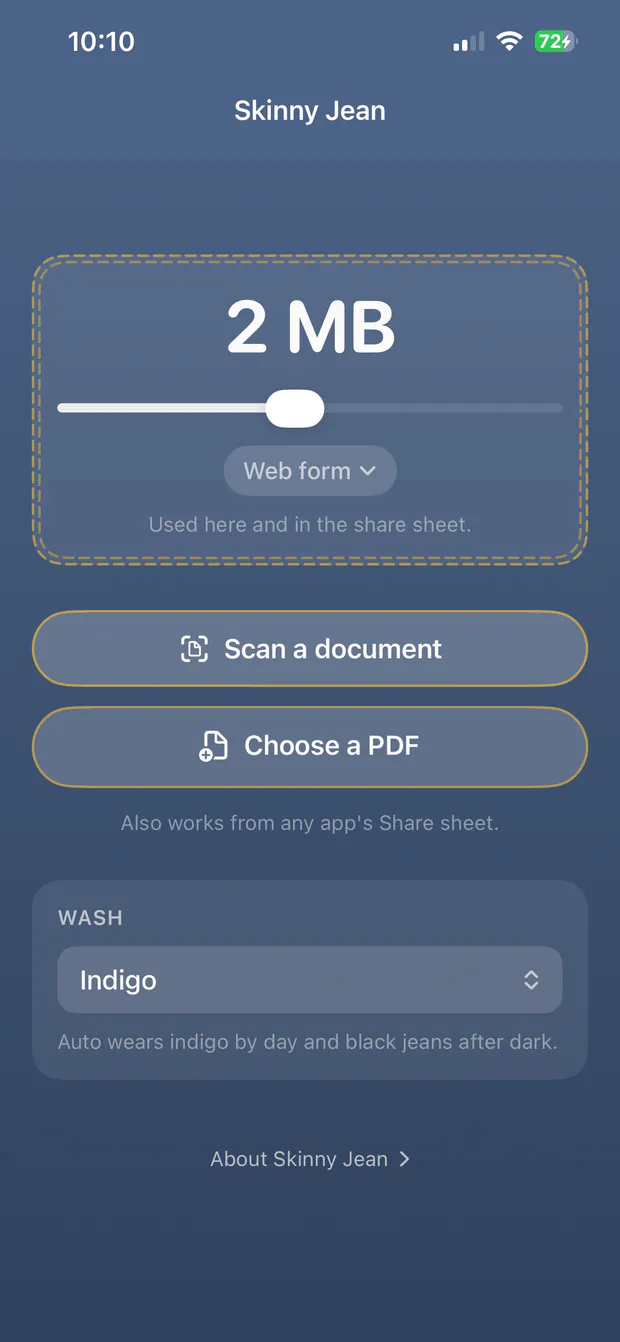
Only your own settings. On the Mac: the target file size, the named destination you last picked from the menu, the denim wash, the widget’s position on screen, and whether it floats on top — kept in macOS preferences. On iPhone and iPad: the target size and the wash, shared between the app and its share extension so the two agree on what you asked for, plus a note that the instructions have been shown once.
No document, and no part of one, is kept in either place. Deleting the app removes the settings.
6. No analytics, tracking, or advertising
There is no analytics SDK, no crash-reporting service, no advertising identifier, and no third-party code in the app. There are no accounts, and nothing to sign in to.
7. Sandboxed by design
Skinny Jean runs in Apple’s App Sandbox on every platform. On the Mac it can read the files you deliberately drop on it and write to your Downloads folder, and has no access to the rest of your disk. On iPhone and iPad the app and its share extension are separate sandboxed processes; the only thing that crosses between them is the target size you picked.
 Skinny Jean